



























































Why your sex toy's material is the first question to ask
Imagine buying kitchenware without wondering if it's food-safe. No one would do that. Yet, every day, thousands of people purchase sex toys without checking if the materials they are made of are compatible with the most sensitive mucous membranes of the human body. This is a reality that the intimate toy industry sometimes prefers not to highlight too much.
The truth is that the sex toy market remains very poorly regulated in Europe. Unlike children's toys or medical devices, adult toys do not have to meet strict health certifications to be sold legally. The result: potentially irritating, porous, or even chemically active materials end up in mass-marketed products, without any clear warning.
This article gives you the keys to understand which materials to choose, which ones to absolutely avoid, and how to sift through often misleading product descriptions. Whether you are a novice or a seasoned collector, this reading could well transform your relationship with your intimate purchases.
Truly safe materials: the exclusive "body-safe" circle
In wellness sexology and public health, the term body-safe is used to describe materials that pose no known risk to mucous membranes and skin tissues. These materials are non-porous (they do not retain bacteria) and free of phthalates and bisphenol A (endocrine disruptors found in some cheap soft plastics).
Medical-grade silicone: the absolute gold standard
Medical-grade silicone is unanimously recognized as the safest material for a sex toy. Chemically inert, hypoallergenic, and non-porous, it releases no substances into the body and can withstand high-temperature sterilization. It is used in medical implants and catheters: its biocompatibility is well-proven.
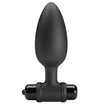
Major reputable brands work exclusively with this type of silicone. This is the case for Fun Factory, whose Bootie Fem anal plugs and Bootie Small are made of certified premium silicone. The texture is soft, the surface is perfectly smooth, and cleaning is remarkably simple.
How do you recognize real quality silicone? Here are a few simple tests:
- The fire test (with caution): Pure silicone leaves a clean white ash. TPE or PVC produce black smoke and a pungent odor.
- The flame test: Silicone does not ignite easily and returns to its original state once cooled.
- The diluted bleach test: Real silicone is not altered by a standard disinfectant solution.
- The smell: Quality silicone has almost no odor. A strong chemical or rubber smell should be a red flag.
Important note: Silicone is incompatible with silicone-based lubricants, which degrade the toy's surface. Always opt for a water-based lubricant with your silicone sex toys.
ABS (rigid plastic): the ally of electronic vibrators
ABS, or acrylonitrile butadiene styrene, is the hard plastic you find in the casing of many electronic devices. In the world of sex toys, it is widely used for the rigid parts of vibrators, control buttons, and motorized housings. It is a non-porous, phthalate-free, and chemically stable material.
High-end clitoral stimulators frequently use an ABS/silicone combination: the internal rigid ABS part houses the motor, while the surface in contact with the skin is made of medical-grade silicone. This is exactly the logic found in products like the Alex Dual Stimulation Vibrator, designed to offer both motor power and softness upon contact.
Borosilicate glass: elegance and maximum safety
Used for laboratory beakers and high-end ovenware, borosilicate glass (Pyrex) is an exceptional material for sex toys. Totally non-porous, sterilizable, and compatible with all lubricants, it also allows for play with temperatures (hot or cold) for new sensations. Its perfectly smooth surface is pleasant to the touch and harbors no bacteria.
The main deterrent remains the fear of breakage, which is often irrational: quality borosilicate glass is extremely resistant to thermal shock. Obviously, you must inspect your toy before each use for any potential cracks.
Stainless steel and anodized aluminum
These two metals are used in high-end sex toys for their rigidity, pleasant weight, and ease of sterilization. Surgical-grade stainless steel (316L) is the same as that used for medical instruments and quality jewelry. These materials are perfectly body-safe, compatible with all lubricants, and have an almost unlimited lifespan if taken care of.
"Grey" materials: acceptable with precautions
Between materials that are clearly safe and those that are clearly dangerous, there is an intermediate zone occupied by materials that are not ideal but remain acceptable under certain conditions.
TPE and TPR: the economic compromise
Thermoplastic elastomer (TPE) and thermoplastic rubber (TPR) are flexible materials widely used in entry-level sex toys. Their main problem is that they are porous: even after cleaning, they retain microorganisms in their invisible interstices. In theory, this poses an infection risk if the toy is poorly cleaned or shared.
In practice, if you use your sex toy alone, clean it thoroughly after each use, and use a condom on it, the risk is significantly reduced. The quality of TPE varies enormously depending on the manufacturer: some produce phthalate-free formulas close to body-safe standards, others do not.
Our recommendations if you opt for TPE:
- Choose a brand that explicitly certifies the absence of phthalates
- Never share the toy without a condom
- Replace the toy as soon as changes in texture, odor, or discoloration appear
- Store in a separate airtight bag (TPE can "sweat" and react upon contact with other materials)
Resin and Cyberskin
These materials mimic the texture of human skin and are prized in realistic masturbators. They are highly porous and require rigorous maintenance. Some masturbators like the Cassian Cup Vibrating Masturbator by Jamyjob combine flexible materials with a rigid casing, which facilitates the cleaning of accessible areas. For these products, using a condom remains the most effective way to prevent any microbiological risk.
Materials to absolutely avoid
This is where things get really important. Some materials still present on the market have documented health risks. This isn't about paranoia, but basic chemistry.
PVC with phthalates: the invisible danger
PVC (polyvinyl chloride) is naturally rigid. To make it flexible, manufacturers add plasticizers called phthalates. The problem? These molecules are not chemically bonded to the PVC: they gradually migrate out of the material and can be absorbed by mucous membranes. Phthalates are known endocrine disruptors: they interfere with the hormonal system, have been linked to fertility issues, and are suspected of promoting certain hormone-dependent cancers.
The European Union has banned phthalates in children's toys since 2005. Sex toys, however, remain in a regulatory vacuum. Yet, studies have shown that some cheap toys sold in Europe far exceed the phthalate thresholds authorized for children's toys.
How to spot them? A phthalated PVC toy often has:
- A strong chemical odor when opening the packaging (sometimes described as "new plastic" or "rubber")
- A very low price
- Vague material description ("rubber," "jelly," "silicone-like")
- A surface that becomes sticky or "sweats" over time
"Jelly": the worst material on the market
The term "jelly" generally refers to a very flexible PVC loaded with phthalates. It is the material most frequently found in very cheap sex toys, often translucent and brightly colored. These products are to be categorically avoided for any intravaginal or intrarectal use.
If you own "jelly" toys and wish to continue using them, always use a condom on them and limit the duration of use. However, the healthiest option remains replacing them with a body-safe product.
Latex: a possible allergy
Natural latex is not problematic in itself for most people, but latex allergy is relatively common (estimated between 1 and 6% of the general population). It can manifest as mild irritation or, in severe cases, anaphylactic reactions. If you have never had contact with latex and are considering a toy made of this material, be cautious.
How to read a sex toy product sheet without getting duped
Manufacturer transparency regarding materials is still far from universal. Here is how to decode what you read (or what you don't read).
Terms that reassure (and why you should question them)
"Silicone" without further specification can hide anything. A toy can contain 10% silicone mixed with 90% TPE and be called "silicone." Look for terms like: medical silicone, medical-grade silicone, certified silicone, or certification from a third-party laboratory.
"Phthalate-free" is a good indicator, but insufficient. A material can be phthalate-free and still be porous. Always ask yourself: is it porous or not?
"Body-safe" is unfortunately an uncertified marketing term. Any manufacturer can put it on their packaging. It carries more weight from a reputable brand with a documented transparency policy than on an anonymous imported toy.
Best practices for verification
- Look for the specific material name in the technical sheet, not just the title
- Consult certifications: CE, RoHS (for electronics), ISO 10993 (biocompatibility)
- Trust brand reputation: Fun Factory, CalExotics, Satisfyer, B Swish, Xocoon have documented material policies
- Beware of prices that are too low: a real medical-grade silicone sex toy cannot cost 5 euros
- Read negative reviews: mentions of strong odor, sticky material, or degradation are red flags
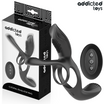
On our shop, we exclusively select brands whose material policies we have verified. The Orca Stimulator by Satisfyer, for example, is entirely made of body-safe ABS silicone, and the brand publishes its material technical sheets upon request. Similarly, the Bfilled Prostate Stimulator by B Swish is certified medical-grade silicone, an important guarantee for a toy intended for internal use.
Care according to the material: cleaning is not universal
Even with the best material in the world, a poorly maintained toy becomes a potential vector for infections. And depending on the material, cleaning methods differ radically.
Summary table of cleaning methods
| Material | Routine cleaning | Sterilization possible | Lubricant compatibility |
|---|---|---|---|
| Medical silicone | Water + mild soap, disinfectant wipe | ✅ Dishwasher, boiling water (without motor) | Water-based only |
| Rigid ABS | Antibacterial wipe, water + soap | ⚠️ No (possible deformation) | All types |
| Borosilicate glass | Water + soap, dishwasher | ✅ Boiling water, autoclave | All types |
| Stainless steel | Water + soap, isopropyl alcohol | ✅ Boiling water | All types |
| TPE / TPR | Lukewarm water + mild soap only | ❌ No (deformation/degradation) | Water-based only |
| PVC / Jelly | Lukewarm water (limited effectiveness) | ❌ No | Water-based only |
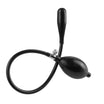
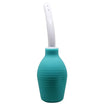
For anal preparation accessories, cleaning your equipment is just as crucial. Products like the Mr Play Anal Douche or the Super Power Enema Bulb are made of materials compatible with rigorous cleaning. Always check the compatibility of your intimate spray or gel with your toys' materials — for example, the products in the sex toy collection of our shop are systematically accompanied by precise care recommendations.
FAQ: your most frequent questions about materials
My old jelly sex toy smells strong. Is it dangerous?
Yes, a persistent chemical odor (especially after cleaning) is a sign of active outgassing of potentially harmful substances. It is best to stop using it without a condom, or better yet, replace it. A body-safe toy should not emit any peculiar odor.
Can I use any lubricant with my silicone sex toy?
No. Silicone-based lubricants degrade the surface of silicone toys and create micro-cracks that promote bacterial growth. Use exclusively a water-based lubricant. For glass, metal, or ABS toys, all lubricants are compatible.
Are sex toys tested before being sold in France?
Unfortunately, there is no specific mandatory health certification for sex toys in Europe. Products must comply with general product regulations (REACH for chemical substances, RoHS for electronic components), but no body systematically checks the composition of intimate toys. This is why choosing brands that are transparent about their materials is essential.
Can a silicone sex toy cause an allergy?
Allergies to pure silicone are extremely rare. However, certain additives (dyes, vulcanizing agents) can cause reactions in very sensitive individuals. If in doubt, test the toy on the inside of your wrist before intimate use.
Are sex toys with batteries or motors different in terms of material safety?
The electronic compartment does not come into contact with the skin, so the material that matters is the one on the outer surface. Good manufacturers use medical-grade silicone for all parts that come into contact with the body, and ABS for the electronic casing. This is the case, for example, with the Eclipse prostate stimulator by CalExotics, whose outer liquid silicone sheath offers optimal flexibility and safety.
Are edible products for sex toys subject to other rules?
Products designed for oral play, such as Secret Play Popping Candy, are subject to European food regulations, which are much stricter than those applicable to sex toys. This is good news: these products are generally very well controlled.
Conclusion: investing in quality is investing in your health
The choice of material for your sex toy is not a matter of snobbery or budget. It is a matter of personal public health. Vaginal and rectal mucous membranes are extremely permeable and absorb what they come into contact with: that is their biological function. Introducing materials loaded with endocrine disruptors or porous surfaces laden with bacteria into these areas is not trivial.
The good news is that the market is moving in the right direction. More and more manufacturers are adopting medical-grade silicone as a standard, and serious specialized boutiques do real work in selection. On our site, every product in the sex toy collection is selected according to strict material quality criteria. Clitoral vibrators like the Stella G-Wand by CalExotics or couple stimulators like the Foreplay Enhancer by Xocoon illustrate the best the market has to offer in terms of safety and pleasure combined.
Our final advice: if you are unsure about the material of a toy you already own, use a condom on it. And for your next purchases, make the material mention your primary selection criterion, even before the shape or functions. Your body will thank you.
Would you like to explore our selection of body-safe intimate toys? Visit our sex toy shop and filter by brand to easily find the products for which we guarantee material quality. Have questions? Our team is available to guide you toward the toy best suited to your needs and the safest for your health.
To go further
